

Your Factory Floor Is Already a Game.

You're Just Not Running It Right.
Games aren't fun because they're games.
That sounds backward, so let me say it plainly: there is nothing inherently enjoyable about jumping on a mushroom or chasing an oblong leather ball.
What makes games fun is that they simulate things we're already driven to experience: status, mastery, belonging, discovery, completion.
Yu-kai Chou spent years mapping this out in a framework called Octalysis, which identifies eight core human motivations and identifies that if you build them into videogames (or any game), people will love playing them. You don't need to study the framework to follow this argument, but if you've ever wondered why some games are impossible to put down and others feel like work, Octalysis is a good place to start looking.
The neurological engine underneath all eight of those drives is one cycle. Cortisol and dopamine. Challenge, then resolution. Stress, then reward. Your brain releases cortisol when you face a problem you're not sure you can solve. It releases dopamine when you solve it. That's it. That's the loop. Every well-designed game is just a machine for generating that cycle repeatedly and generating it around things people already care about.
Now ask yourself: is a daily operator audit actually fun? It doesn't sound like fun, does it?
Then why do operators love them in plants that use them?
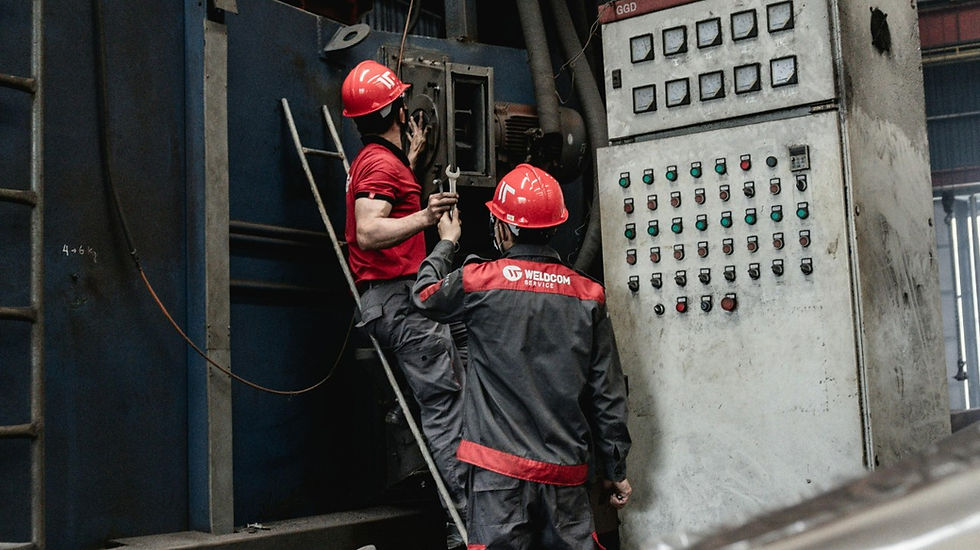
If you have someone walk the floor every day and quiz your people on whether they know critical knowledge, ask if they're following procedures, and reteach them when they miss, that reliably creates a cortisol/dopamine cycle on a 24-hour clock.
First, your people will anticipate the challenge of your questions. The anticipation itself generates additional cortisol, which means they are mentally preparing before you arrive. This preparation is critical because that preparation creates an individual change management practices that makes process changes very easy to drive. That is the "challenge and mastery drive", what Octalysis calls CD2, and it is the mechanical core of what makes games worth playing.
The question bank matters here too. Rotating questions drawn from the operator's actual job scope introduce an element Octalysis calls unpredictability, the curiosity drive. They should know the questions will be about important material, but they should not know which questions are coming. That low-level suspense is not trivial. It's the same mechanism behind a good mystery novel or a roll of the dice. It's a surprise and it needs to be. Applied to a skills audit and executed daily, it keeps the interaction from going stale.
And when the auditor marks a correct answer, something else happens. Someone saw it. It doesn't even have to be a leader, you can run this process administratively. Pearson's Law tells us that what gets measured gets improved, but measurement alone is inert. It's the witness that activates it. The auditor's presence is the social proof that the measurement matters. Octalysis calls this social influence, the human need to be seen and recognized by people whose opinion matters. On a factory floor employees can go weeks or months without meaningful acknowledgment. Many employees are absolutely starved for it. A short battery of correct answers to relevant questions, witnessed by another person, recorded officially, and maybe a "good job" when they get them right lands harder and means more than most people realize.
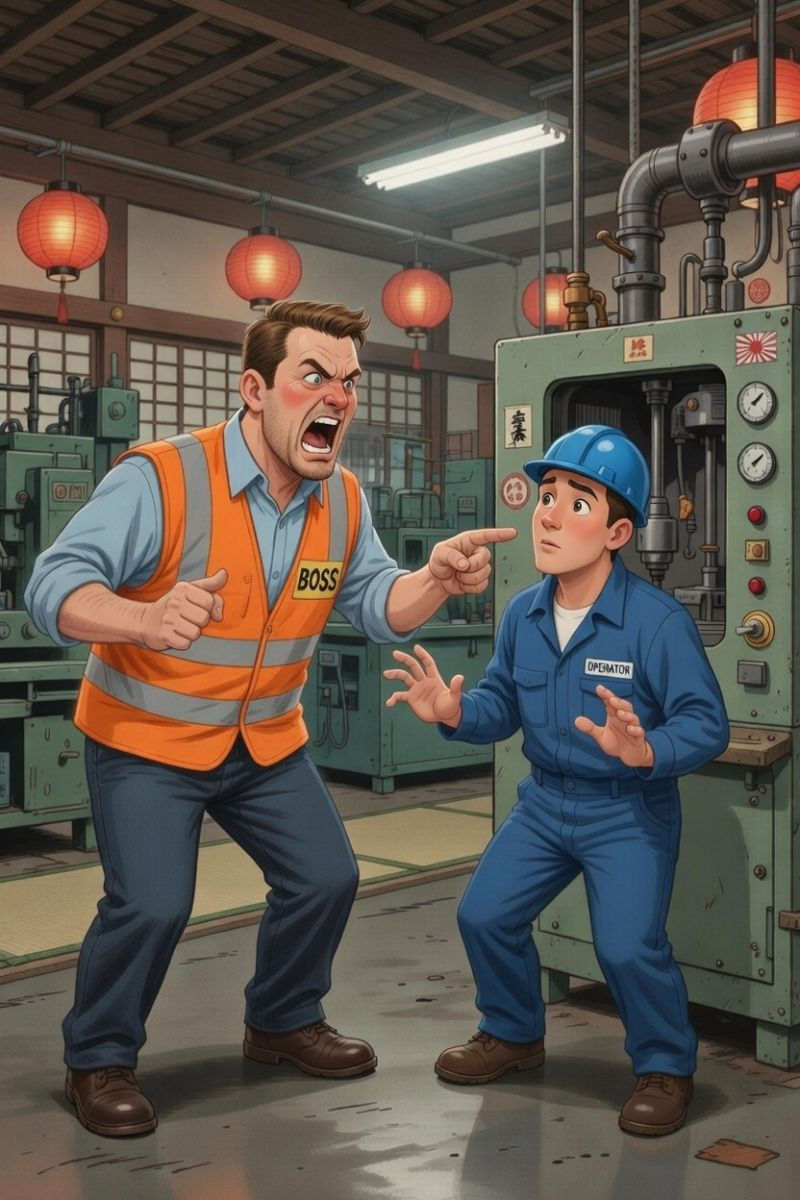
Now consider what punishment would do to that system. In game design, loss avoidance is a recognized motivational drive, but it's a dark one. Designers use it carefully because punishment doesn't just raise stakes, it changes the emotional relationship with the game itself. People don't quit games for minor setbacks, but they quit when a game starts to feel like it's working against them. Punishment in a workplace does the same thing. It embitters the experience. It makes people dread the audit instead of anticipate it, and the moment they dread it, the cortisol stops being productive and starts being corrosive. The whole cycle breaks. This is why the no-punishment rule for missing points on a daily audit isn't a soft policy, it's critical. (If you don't believe that, look up "The Super Mario Effect" on google.)
Now consider what happens to the operator who initially gets some wrong but eventually passes every day. That person is not just compliant. He's the person on that line who indisputably knows his craft. He can answer the question, explain the standard, tell you why it matters. The audit becomes the daily proof of that, a record proving he's good. Over time, excellence and achievement in his job becomes a part of his identity. Our jobs are already important parts of our lives, building a reputation of excellence changes people. It elevates people with purpose. Octalysis calls this epic meaning, the sense that you're not just executing a task, you're becoming someone with purpose. A system that builds genuine competency gives people something to be proud of. Professional identity. Craft. That is a far more durable motivator than a compliance scorecard and it costs nothing extra to deliver.
This is not gamification in the carnival sense. You don't need points or badges or a scoreboard. It's a system that, by design, generates the same psychological conditions that make games worth playing, and it does it around content that matters to the business.
Here's what most operations leaders miss entirely:
If you structure the employee experience so that the cortisol/dopamine cycle fires around things that produce real excellence, correct knowledge, demonstrated mastery, witnessed achievement, your people won't just perform well. They'll enjoy it. Not in spite of the rigor, but because of it. You will have serviced the same core functions that make a great game worth playing. Except the output isn't a high score. It's a workforce that actually knows what they're doing and takes pride in the fact that they do.
The factory floor was always a game. Most managers just never learned the rules.
If you're building something like this in your plant, I'd be interested to hear how it's running.

Comments