

The Deferred Maintenance Paradox: Saving Pennies, Losing Dollars

In the world of asset management, deferred maintenance seems like a quick win, a way to cut costs today and free up budget for other priorities.
Maintenance costs are deferred for several reasons. It could be because the organization cannot find the time for shutdown, doesn't plan well enough to get the work done, or just won't spend the money.
But here's the harsh reality, what looks like savings upfront inevitably spirals into massive financial losses down the line.
It's a classic paradox. We postpone repairs to "save" money, only to lose far more through accelerated breakdowns, inefficiencies, and escalated fixes.
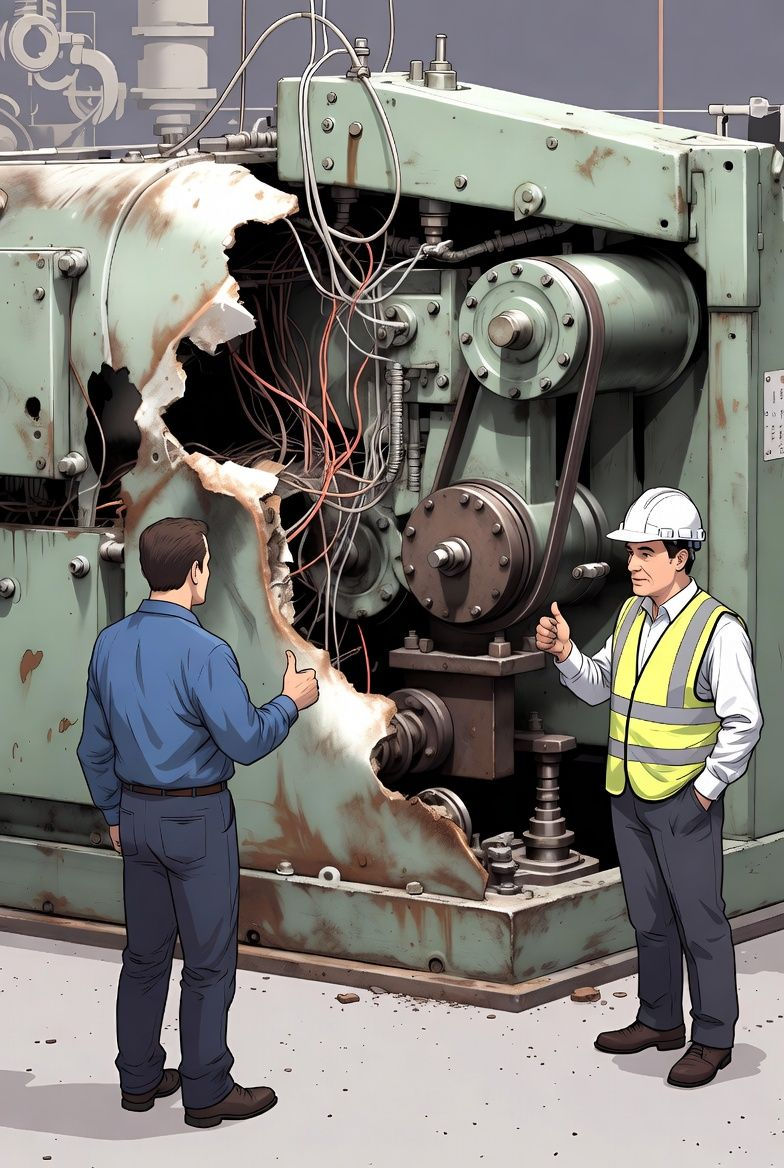
Why does this happen? Minor issues don't stay minor. Broke stuff breaks stuff.
Everything associated with a broken part degrades faster.
Example: A bearing that's failing on a conveyor, for instance, can cause a belt to track against the frame. The belt will fray and break while it's cutting the frame. It may damage other rollers or product as it fails. The entire drive train is carrying more strain and wearing faster. The motor is running hotter. Motor life halves for every 10 degrees C hotter it runs, so that's going to cost you. And on and on. Every aspect of that powertrain between your switchgear and that bearing is dying faster.
Equipment running inefficiently consumes excessive energy, contaminates product and other equipment, shortens lifespans of adjacent components, and triggers chain reactions of failures.
The short-term "savings" compound into long-term liabilities, far increasing the future costs.
This isn't just theory, it’s backed by data.
Research from Pacific Partners Consulting Group shows that for every $1 deferred in maintenance, organizations face $4 in future capital renewal needs.
Similarly, a 2024 BOMA report highlights U.S. facility backlogs exceeding $500 billion, noting that every $1 deferred can lead to $4–$7 in repair or replacement costs as issues compound at about 7% annually.
And if you think the downtime you're saving to avoid the initial problem is worth it, you're wrong. The losses in productivity for unreliable operation and future repair time will far outweigh savings by an even wider margin.
The lesson? Proactive maintenance isn't an expense, it’s an investment.
Corrective maintenance is preventive maintenance. The cheapest way to run is to keep your equipment in tip-top shape.
By addressing issues early, you avoid the paradox altogether, boosting reliability, cutting long-term costs, and safeguarding operations.
The most expensive problems are rarely the original problems.
They're the consequences that follow when small issues are allowed to compound over time.
That's true in maintenance. It's true in operations too.


Comments