

Maintenance Detective: Pneumatic Cylinders

A messy powder filler is fed by a pair of pneumatic indexing cylinders. They gate bottles into the filler one at a time.
But there is a problem:
When you start the line it runs perfectly. Crisp, fast index strokes. About two minutes in, the cylinders start getting lazy. Strokes slow down. Bottles start arriving late. Then the indexers barely move and the filler starves.
Stop the line for a bit. Restart. Perfect again... for about two minutes.
Over and over. All shift.
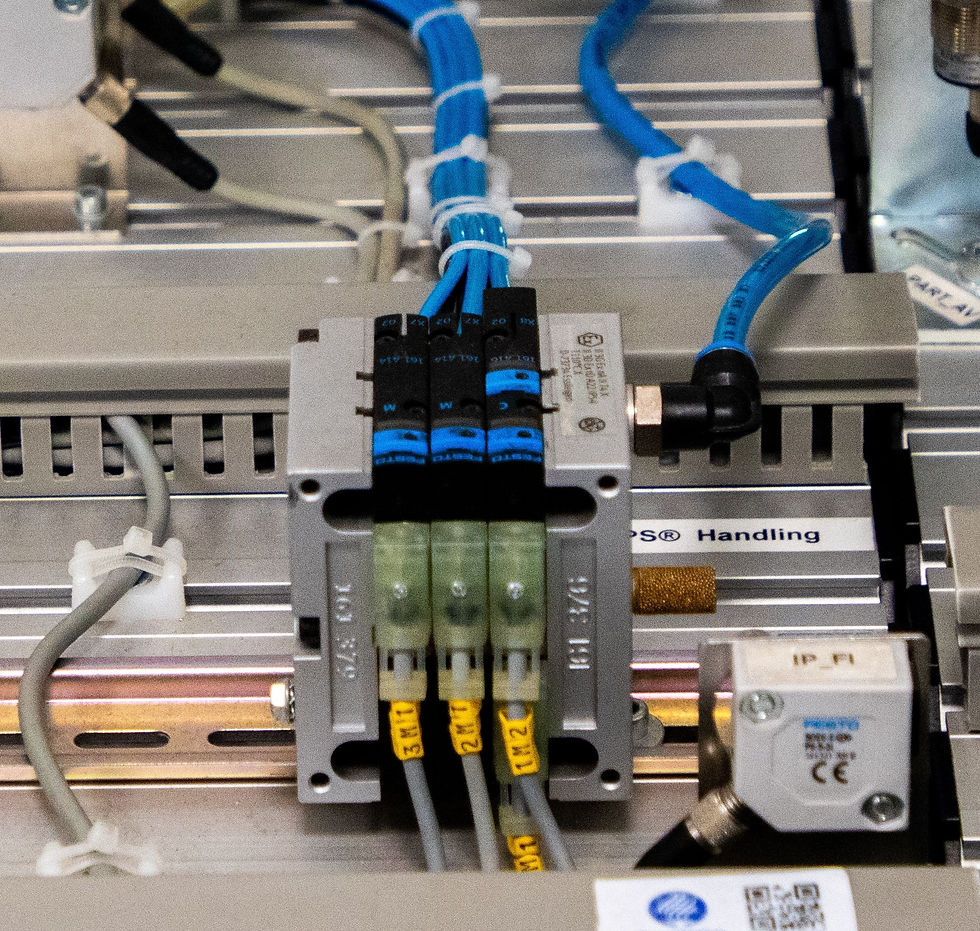
You have a peek a the solenoid valve block, and the LED on the coil is turning on and off right on time with every index command. PLC output is good. Signal is good.
What should I check next?
Answer:
There are quite a few ways to have an unresponsive solenoid, but this one is really the clear signature of a pressure build-up or letdown in the cylinder.
Specifically, a constriction or consumption in the air circuit is likely the culprit.
That explains why it works after a stop... the pressures are able to equalize when it's not running and that gives you the ability to run again, but your run usage is outpacing your supply.
Here are the 2 most probable places to check:
Pressure drops as the strokes slow? It's supply. Walk upstream with the gauge until the drop disappears. The restriction is between your last bad reading and your first good one.
This could be a pinched line or an almost-closed valve.
Pressure holds steady and the cylinders still fade? Now look at the exhaust side and the valve itself.
I recommend changing the stone-style mufflers on valve blocks annually. They're cheap. If you're running dirty, they will slowly plug up. When that happens, you can over-run their capacity and you'll get this exact symptom.
Recurring equipment issues don't always start with the component showing the symptoms. Finding the underlying cause is what prevents the same issue from returning.


Comments