

Laws of Leadership: Price's Law

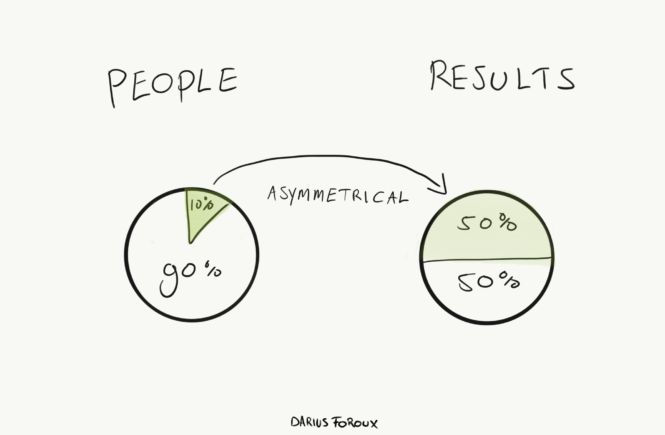
A handful of people on your team carry most of the load.
Price's Law - Half of the work in any domain is done by the square root of the total number of participants.
Example: If your team has 100 people, Price's Law suggests just 10 of them produce 50% of the output. (Heads always start nodding when they see this example).
This law absolutely applies to what I would call a "legacy" organization. If you've been hired to lead change, you probably face an organization which is fully implementing Price's Law.
Price's Law does two key things for you as a leader:
1) This law highlights which people you need to promote or train for elevated opportunities, the vital few driving results. Those people will produce no matter what you do. Promote them. They have the drive to grow and to overcome the obstacles they will face in new roles. (Their drive does NOT negate the need to train them).
Note: these people are probably not happy that they're working harder and for limited gain. They may be prickly when you first approach them. Do it anyway.
They are the pulse of the organization and they're usually regarded as leaders (whether they have titles or not).
They need you to see them. They need you to recognize what they're doing. They need you to create processes/standards for everyone and hold the rest of the organization accountable for meeting those standards.
The respect the organization has for them also makes them a critical group to win-over. If they believe in the changes you want to make, everyone else will follow.
2) This law clarifies the depth of the need for strong process and process verification systems to level the output of the team to an acceptable standard.
If 10 people can produce the same as 90, how much better could the organization perform if we had standard processes?
Process design, the creation of clarity, and process accountability are the treatment for this problem.
"A sense of urgency" will not beat Price's Law. If you try to elevate the sensor of urgency, that will have the most impact on the top performers who will internalize that demand as negative feedback on their already high effort. You will get friction between you, your high performers, and everyone else and it will cost you.
Promote and train your high performers for bigger roles. For the rest, roll out robust processes and verify they're followed.
Leading change is hard. Price's Law describes what you'll walk into. It should not describe your end state. With smart promotion and solid processes, you can beat it.



Comments